
Introduction
Deep learning models require significant computational power, particularly as data-sets and model architectures become increasingly complex. Training these models on a single GPU can take considerable time or may not provide enough memory for larger workloads.
GPU clusters for deep learning address this challenge by connecting multiple GPUs and allowing them to work together. This infrastructure can accelerate training, support larger models, and provide computing capacity for demanding AI applications.
What Is a GPU Cluster?
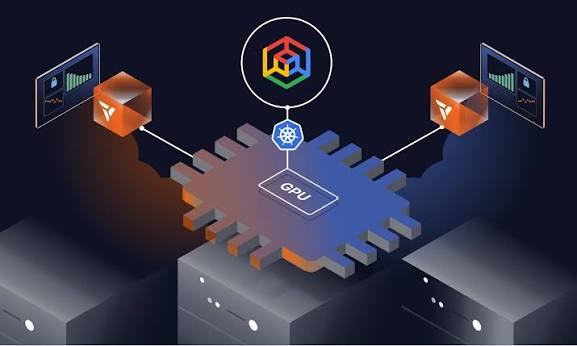
A GPU cluster is a group of interconnected servers or computing nodes equipped with multiple graphics processing units. These GPUs work together to process computational workloads. Deep learning frameworks can distribute model training across multiple GPUs. Instead of relying on one processor, the workload can be divided among several GPUs, allowing organizations to increase computing capacity.
Benefits of GPU Clusters for Deep Learning
1. Faster Model Training
One of the biggest advantages is reduced training time. Multiple GPUs can process portions of a workload simultaneously. For large deep learning projects, this can significantly accelerate experimentation and development. Faster training also allows teams to test different model architectures and configurations more efficiently.
2. Support for Larger Models
Some deep learning models are too large to fit comfortably within the memory of a single GPU. A cluster can provide access to substantially greater aggregate computing resources. Distributed approaches can allow large models to be trained across multiple GPUs, making sophisticated AI workloads more practical.
3. Greater Computational Capacity
GPU clusters provide substantial parallel processing capabilities. This makes them suitable for workloads involving large data-sets, complex neural networks, image processing, natural language processing, and generative AI.
4. Better Resource Sharing
A properly managed cluster can support multiple users and workloads. Scheduling software can allocate GPU resources according to project requirements. This can improve utilization and prevent expensive GPUs from sitting idle.
Challenges of GPU Clusters
1. High Infrastructure Costs
Building a GPU cluster can require significant investment. Costs can include GPUs, servers, networking equipment, storage, power, cooling, and maintenance. Businesses need to evaluate whether the expected performance benefits justify the investment.
2. Complex Networking
Communication between GPUs becomes increasingly important as cluster size grows. Distributed deep learning workloads frequently exchange information between GPUs.
High-speed networking and suitable interconnect technologies may therefore be required to prevent communication bottlenecks.
3. Software Complexity
Managing a cluster requires more than installing GPUs. Organizations may need tools for workload scheduling, monitoring, orchestration, resource allocation, and distributed training. Frameworks such as PyTorch and TensorFlow support distributed training, but teams still need appropriate configuration and infrastructure expertise.
4. Power and Cooling
High-density GPU servers generate substantial heat and consume significant amounts of electricity. Data-centre infrastructure must be capable of providing adequate power and cooling. These operational requirements can increase the total cost of running a cluster.
Conclusion
However, organizations must also consider infrastructure costs, networking, software complexity, power consumption, cooling, and technical expertise. For businesses and research organizations with substantial AI workloads, carefully designed GPU clusters can provide the scalability and performance needed to develop and deploy sophisticated deep learning models efficiently.









Leave a Reply